Prompt-Driven Physics Timer
An AI Studio export that promised AI-driven timers and delivered a 3,000-particle physics engine instead — recon, rescue, and ship in two sessions.
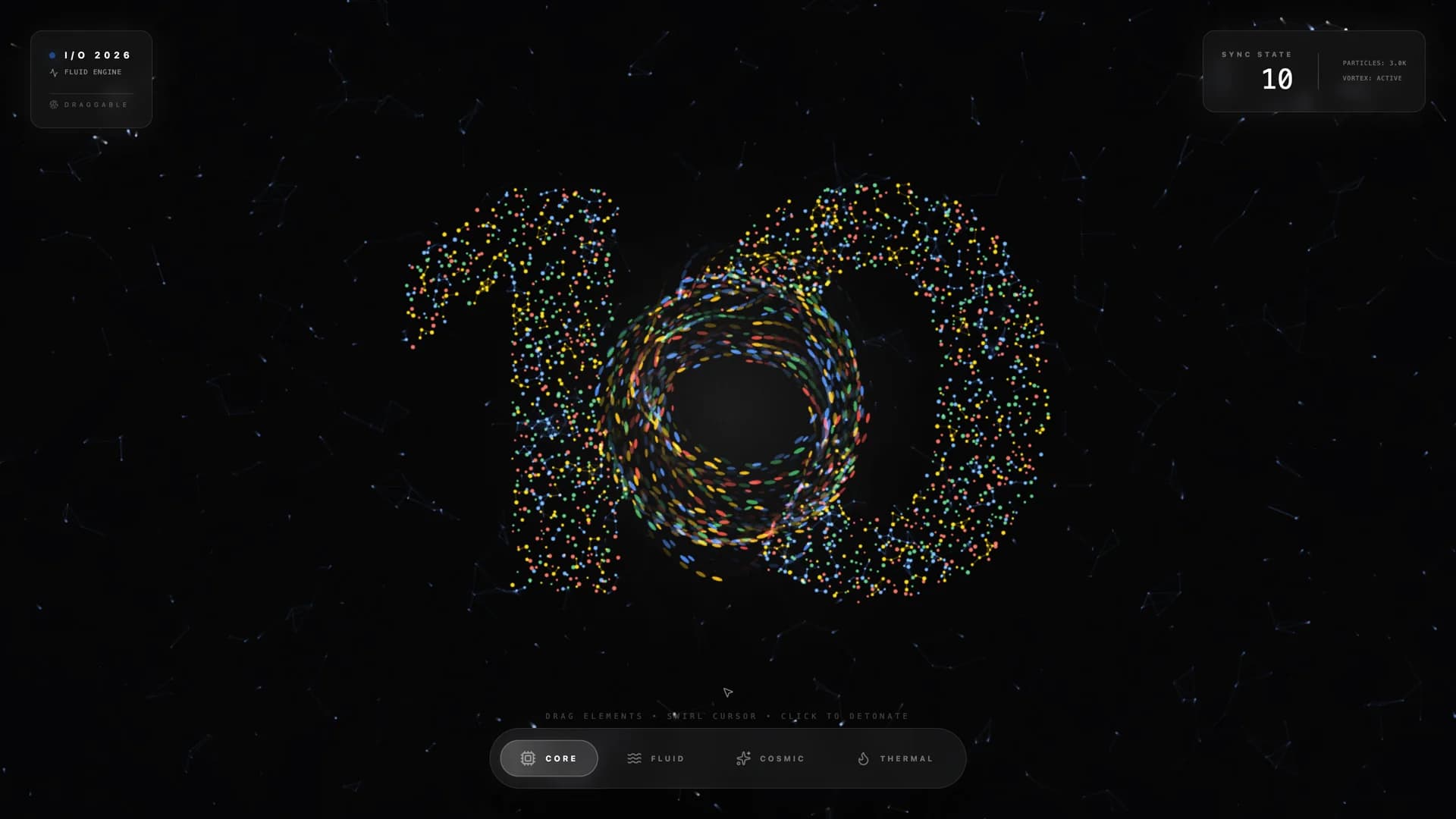
3,000-particle N-body physics engine rasterizing countdown digits with vortex interaction and ambient mesh lattices.
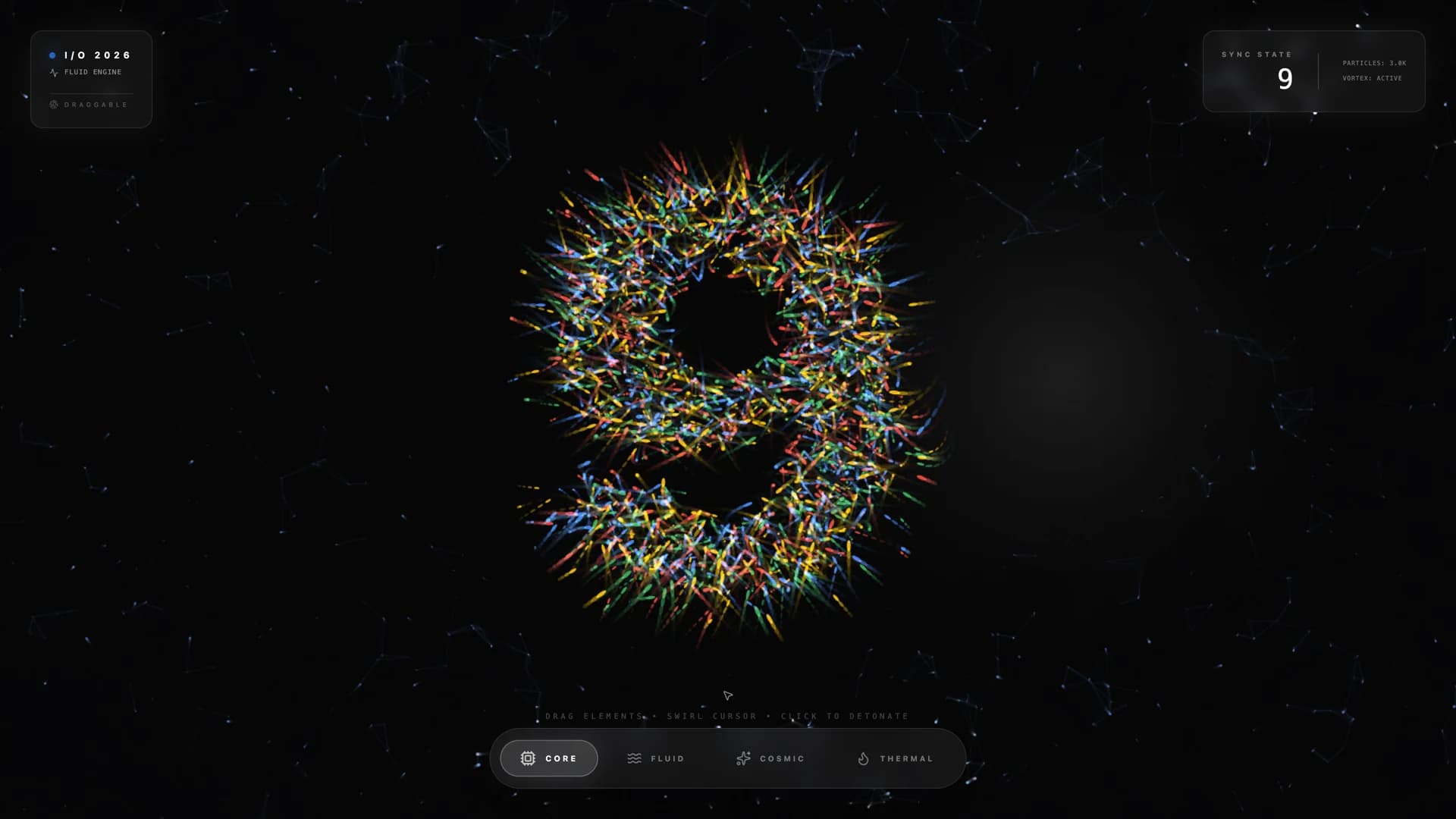
Started as a blind drop into an AI Studio export — a codebase that called itself "Prompt-Driven Physics Timer" but had zero AI integration and no configurable timer behavior. What it did have was a custom N-body particle engine running 3,000 particles through spatial-grid-accelerated physics across four distinct simulation modes. The recon session mapped the full codebase and found 712 lines of monolithic React/Canvas physics with SPH fluid dynamics, vortex cursor interactions, and text rasterization for countdown digit formation. Eleven days later, a single 26-minute rescue session stripped the dead dependencies, fixed a broken shimmer animation, captured media, wrote the README, and pushed it clean to GitHub. The gap between what the name promised and what the code actually built turned out to be the interesting part of the story.
Timeline
Dropped into a raw AI Studio export called "Prompt-Driven Physics Timer" — expected to find a Gemini-powered prompt UI. Found zero AI code and a monolithic 712-line particle engine instead. The Gemini SDK was installed, imported nowhere. Express and dotenv were scaffolded as dead weight. What was there: a full N-body simulation — 2,200 main particles forming countdown digits via offscreen canvas text rasterization, 800 ambient "dark matter" particles drifting behind them, spatial grid hashing for O(n) neighbor lookups, SPH pressure forces in fluid mode, and four distinct physics modes (Core, Fluid, Cosmic, Thermal) each with unique color palettes and force models. The countdown runs 10 → 9 → ... → 1 → I/O on a 6-second loop. No user input, no configurable timers — the name promised AI integration that was never built. The engine itself, though, was legitimately good work. Verdict: strip the ghost dependencies, rename honestly, and ship the particle engine as what it actually is.
Came back to the physics timer 11 days after recon, said "get this running and ship it," and the whole rescue — boot to GitHub push — took 26 minutes. Stripped 6 dead dependencies (@google/genai, express, dotenv, autoprefixer, tsx, @types/express), fixed a silently broken shimmer animation that was missing its @keyframes declaration, cleaned every AI Studio scaffold artifact (cleanup log, audit report, default title, HMR disabling hack). Added an SVG favicon, captured 3 screenshots and a 4.3 MB demo GIF via Chrome DevTools MCP, wrote a README that leads with the demo and explains the I/O countdown context. Package count dropped to 159 clean dependencies, zero npm audit vulnerabilities, zero console errors. The app itself turned out to be genuinely fun — the four physics modes (Core, Fluid, Cosmic, Thermal) each completely transform the particle behavior, and the explosive transitions between countdown digits have real visual impact. The cursor creates a vortex effect and the glassmorphic HUD panels push particles out of their way when you drag them. One commit, pushed clean.